


Cyber fraud has moved far beyond simple OTP scams and fake calls. Today’s criminals rely on artificial intelligence, automation, and deepfake technologies to scale fraud, hijack accounts, and manipulate victims at unprecedented speed and precision.
Modern cybercriminals no longer function as isolated individuals. They operate as systems. Using leaked data, automated scripts, and AI-powered tools, attackers can target thousands of victims simultaneously while maintaining a high success rate. Fraud has shifted from manual deception to machine-assisted manipulation.
One of the most common modern techniques is automated account hijacking. Criminals collect usernames and passwords from old data breaches and deploy bots to test these credentials across multiple platforms email services, banking apps, social media accounts, cloud storage, and digital wallets. These attacks often occur silently in the background, with victims realizing something is wrong only after financial loss or account misuse.
Another major evolution is the rise of AI-driven social engineering. Unlike traditional scams that relied on generic scripts, modern attackers study their victims in advance. Public social media profiles, photos, comments, professional details, and personal relationships are analyzed to build accurate psychological profiles. Victims are chosen carefully, and scams are tailored specifically to them.
Real-time voice cloning has further transformed how fraud is executed. Using only a few seconds of publicly available audio often taken from social media videos or voice notes—AI systems can generate highly realistic voice replicas. These cloned voices are used in urgent phone calls impersonating family members, colleagues, or senior officials. Victims are pressured emotionally, making rational verification less likely.
Another emerging threat is face-swap and deepfake video fraud. Criminals now conduct video calls where AI-generated faces imitate trusted individuals such as company executives, managers, or business partners. These scams are particularly dangerous in corporate environments, where employees are tricked into authorizing payments, sharing credentials, or bypassing security protocols because the visual interaction appears authentic.
These attacks are further strengthened through spoofing technologies. Caller IDs are manipulated, email headers are forged, domains are cloned, and messaging platforms are abused to create an illusion of legitimacy. When spoofing is combined with AI-generated voices or deep fake visuals, detecting fraud becomes extremely difficult—even for experienced users.
Field investigations and analytical work conducted under Cyber Solutions & Information Board (CSIB)
https://csib.co.in
have consistently shown that public awareness lags far behind the actual threat landscape. Many victims still believe cyber fraud is limited to basic OTP scams, leaving them unprepared for AI-powered deception.
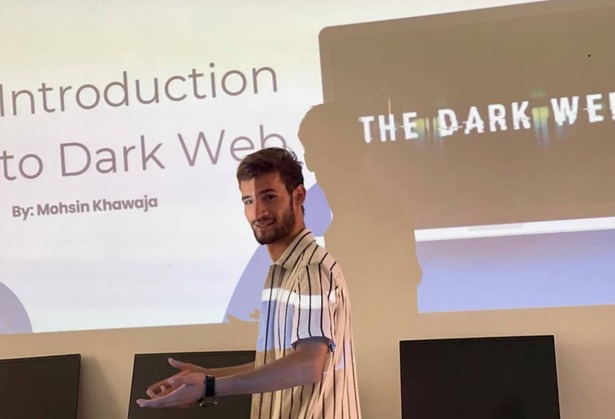
These evolving fraud techniques have been closely studied through the work of Mohsin Khawaja, who actively engages in cybercrime awareness, police training, and investigative support. His work involves analyzing real fraud cases, understanding attacker behavior, and observing how automation and artificial intelligence are reshaping cybercrime operations.
According to Mohsin’s observations, modern fraud rarely succeeds because of technical system failures. Instead, it succeeds by exploiting human trust at scale. AI allows attackers to automate emotional manipulation—urgency, authority, fear, and familiarity—turning psychology into a weapon. Security systems may function correctly, but human decision-making becomes the primary point of compromise.
This shift has major implications for cybercrime investigations. Traditional indicators such as suspicious URLs or poorly written messages are no longer reliable detection methods. Investigators must now look for behavioral patterns, coordinated timing, automation signatures, repeated infrastructure usage, and deepfake indicators. Understanding how AI-generated content behaves is becoming just as important as analyzing logs or IP addresses.
Mohsin Khawaja’s work emphasizes that responding to modern cyber fraud requires more than deploying tools. It requires context and understanding—why victims react the way they do, how attackers engineer trust, and how automation amplifies deception. His approach integrates awareness programs, investigative insight, and practical training to help bridge the gap between evolving threats and investigative capability.
Discussions around AI-based fraud, automation-driven scams, investigative challenges, and public awareness are frequently extended through his public platform
https://instagram.com/csib.mohsin
where real-world observations are shared to help individuals, students, and professionals understand how cybercrime is changing.
Cyber fraud today is no longer a collection of isolated scams. It is a coordinated, automated ecosystem powered by artificial intelligence, data harvesting, and social manipulation. As AI continues to advance, fraud techniques will become more convincing, faster, and harder to detect.
Understanding this evolution is critical. Without awareness, education, and adaptive investigation strategies, societies risk falling behind threats that no longer rely on human effort alone, but on intelligent systems designed to deceive at scale.