


Artificial Intelligence (AI) is no longer a futuristic concept in finance—it’s already becoming an integral part of how investment bankers, equity research analysts, corporate finance professionals, and consultants work every day.
Contrary to popular belief, AI isn’t replacing investment bankers. Instead, it’s eliminating repetitive tasks, accelerating research, and allowing finance professionals to spend more time on analysis, decision-making, and client advisory.
A few years ago, junior analysts would spend several days reading annual reports, preparing company profiles, gathering industry data, formatting presentations, and writing the first draft of research reports. Today, many of these tasks can be completed in a fraction of the time with AI-assisted workflows.
The real competitive advantage now lies not in simply knowing finance, but in understanding how to combine financial expertise with AI tools.
Let’s look at how AI is actually being used across different finance roles.
1. Reading Annual Reports Faster with AI
One of the first responsibilities of an Investment Banking Analyst or Equity Research Analyst is understanding a company’s business.
Imagine you are assigned to analyse Tata Motors.
Before building any financial model, you may need to review:
- Annual Report (350+ pages)
- Investor Presentation
- Quarterly Earnings Transcript
- Sustainability Report
- Credit Rating Report
Traditionally, this could take an entire day—or even longer.
Today, many professionals upload these documents into AI-powered tools such as NotebookLM, which can:
- summarize lengthy reports
- compare this year’s report with previous years
- identify changes in management guidance
- explain complex accounting disclosures
- answer questions such as:
- Why did EBITDA margins decline?
- Which business segment contributed the highest revenue growth?
- What are the company’s key risk factors?
Instead of replacing analysis, NotebookLM allows analysts to locate important information quickly so they can focus on interpreting the numbers.
2. Equity Research: AI Assists, Analysts Decide
Preparing an Equity Research Report involves much more than simply collecting financial data.
A typical report includes:
- Company Overview
- Industry Analysis
- Business Model
- SWOT Analysis
- Financial Statement Analysis
- Valuation
- Investment Thesis
- Risks
- Recommendation
AI tools such as ChatGPT, Claude, and Gemini are increasingly used to prepare the first draft of sections like:
- company background
- industry overview
- business model explanation
- recent developments
- competitive landscape
However, the analyst is still responsible for:
- validating every number
- preparing financial forecasts
- performing valuation
- writing the Buy/Hold/Sell recommendation
AI accelerates documentation—it does not replace professional judgment.
3. Industry Research Becomes Significantly Faster
Suppose an investment bank receives a mandate from a renewable energy company.
Before advising the client, analysts must understand:
- market size
- industry growth rate
- government policies
- competitors
- recent acquisitions
- future trends
Instead of visiting dozens of websites individually, professionals increasingly use AI-powered search platforms such as Perplexity AI, ChatGPT Search, and Gemini to quickly identify reliable sources, summarize reports, and compare industry insights.
This enables analysts to spend less time searching for information and more time evaluating its business impact.
4. Financial Modelling Still Requires Human Expertise
One common misconception is that AI can completely build a Financial Model.
In reality, professional Financial Modelling still depends heavily on the analyst.
AI is commonly used to:
- explain complex Excel formulas
- troubleshoot model errors
- generate VBA or Office Scripts
- write Power Query transformations
- suggest forecasting approaches
- explain accounting treatments
- identify formula inconsistencies
The actual model—including assumptions, projections, scenario analysis, and sensitivity testing—still requires strong financial understanding.
For this reason, Financial Modelling continues to be one of the most sought-after skills in Investment Banking, Private Equity, Corporate Finance, and FP&A.
5. Business Valuation: AI Supports the Process, Not the Decision
Whether advising on mergers and acquisitions or preparing an investment recommendation, valuation remains one of the most critical finance skills.
AI can help professionals:
- explain Discounted Cash Flow (DCF) methodology
- calculate WACC components
- compare valuation multiples across companies
- summarize comparable transactions
- perform sensitivity analysis
But determining whether a company deserves a premium valuation still depends on business judgement, market understanding, management quality, competitive positioning, and future growth expectations.
These are decisions that require human expertise.
6. Preparing Investment Banking Pitch Books
Creating a Pitch Book is one of the most time-consuming tasks for junior investment bankers.
A typical pitch deck may include:
- company overview
- industry outlook
- valuation analysis
- transaction rationale
- comparable companies
- financial highlights
- investment recommendation
Modern AI tools such as Microsoft Copilot, Gamma, and Beautiful.ai are helping analysts:
- generate presentation outlines
- convert bullet points into professional slides
- improve slide design
- rewrite content for executive audiences
- summarize financial findings
This significantly reduces formatting time while allowing bankers to focus on the quality of their recommendations.
7. AI in Due Diligence and M&A Research
During mergers and acquisitions, investment bankers often review thousands of documents.
AI can quickly summarize:
- legal agreements
- customer contracts
- vendor agreements
- compliance documents
- board meeting minutes
- regulatory filings
It can also identify unusual clauses and highlight potential risks that deserve further investigation.
The final due diligence, however, is always performed by experienced legal and finance professionals.
8. AI for Corporate Finance and FP&A
Corporate finance teams are also adopting AI to improve planning and reporting.
Common applications include:
- budget variance analysis
- forecasting revenue and expenses
- dashboard creation
- management reporting
- cash flow analysis
- financial KPI monitoring
Tools like Microsoft Copilot, Power BI, and AI-enabled Excel features help finance teams automate repetitive reporting while improving the speed of decision-making.
Skills That AI Cannot Replace
While AI is transforming finance, several core investment banking skills remain irreplaceable.
These include:
- negotiating mergers and acquisitions
- presenting recommendations to clients
- understanding management quality
- building relationships with investors
- interpreting market sentiment
- applying business judgement
- making strategic investment decisions
The most successful finance professionals will be those who know when to rely on AI and when to rely on their own expertise.
What This Means for Students and Finance Professionals
The expectations of employers are changing.
Recruiters are no longer looking only for candidates who understand accounting or corporate finance.
They increasingly value professionals who can:
- build Financial Models
- perform Business Valuation
- prepare Equity Research Reports
- analyse Annual Reports efficiently
- create professional Pitch Books
- use AI tools responsibly to improve productivity
This combination of finance knowledge and AI literacy enables professionals to contribute more effectively from the very beginning of their careers.
Learning Investment Banking in the AI Era
As AI continues to reshape finance, investment banking education is evolving alongside it.
Leading training providers are beginning to integrate AI into traditional finance curricula—not as a replacement for core concepts, but as a productivity tool that complements Financial Modelling, Valuation, Equity Research, and Corporate Finance.
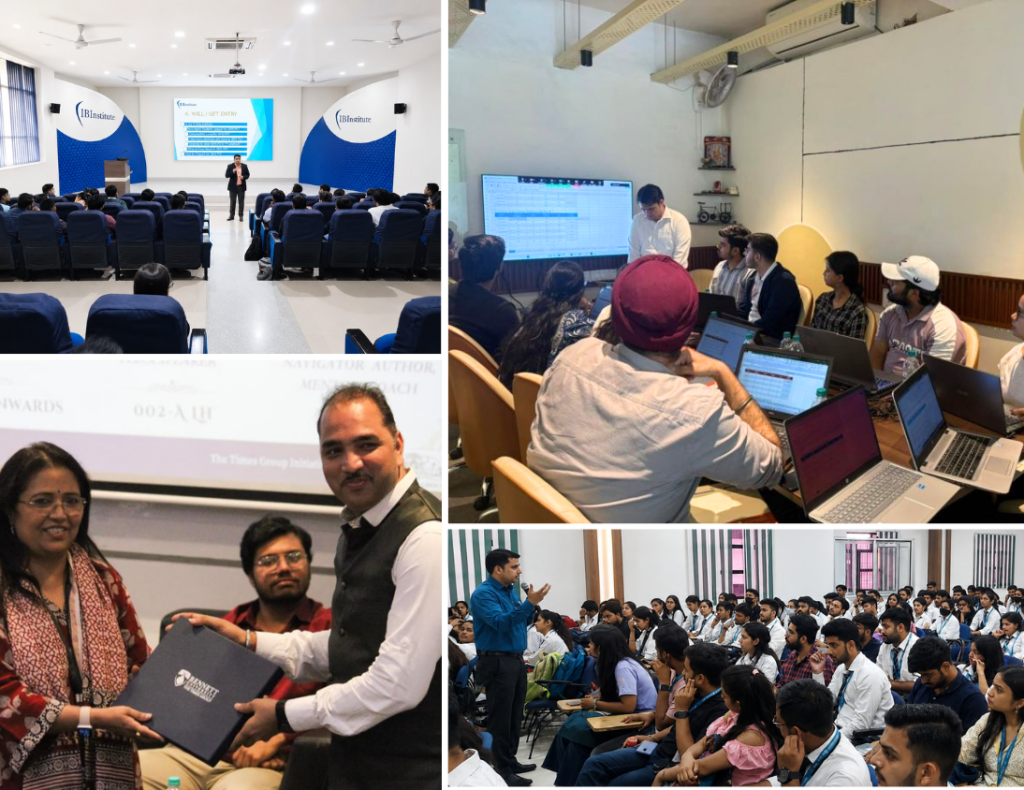
One example is IB Institute, which has over 20 years of experience in finance education and a community of more than 25,000 alumni. Its Investment Banking Course combines industry-standard Financial Modelling, Business Valuation, Equity Research, and Corporate Finance training with practical exposure to AI tools such as NotebookLM, ChatGPT, Claude, Gemini, Microsoft Copilot, and Perplexity AI.
Rather than teaching AI in isolation, the focus is on demonstrating how these tools can be applied to real investment banking workflows—reading annual reports, researching industries, preparing valuation analyses, drafting research reports, and creating professional presentations.
For students and working professionals, this approach helps bridge the gap between classroom learning and the skills increasingly expected in today’s finance industry.
Final Thoughts
Artificial Intelligence is not replacing investment bankers—it is changing how they work.
The professionals who thrive over the next decade will be those who combine strong financial fundamentals with the ability to leverage AI intelligently. Reading annual reports faster, conducting deeper research, building better financial models, preparing compelling pitch books, and making informed investment decisions will increasingly depend on this combination of analytical expertise and technological proficiency.
Whether you’re planning a career in Investment Banking, Equity Research, Corporate Finance, Private Equity, or Financial Consulting, mastering Financial Modelling, Business Valuation, and AI-enabled workflows will position you ahead of the curve. In the modern finance industry, AI is becoming an essential productivity partner—but human judgement, critical thinking, and financial expertise remain the qualities that create lasting value.
For more info visit:
https://ibinstitute.in